Posture Matters: Desk-Friendly Moves to Reduce Aches and Strain
Turn long desk hours into pain-free productivity with simple, science-backed posture tweaks and 1-minute movement snacks you can do without leaving your chair.
Reboot Your Alignment
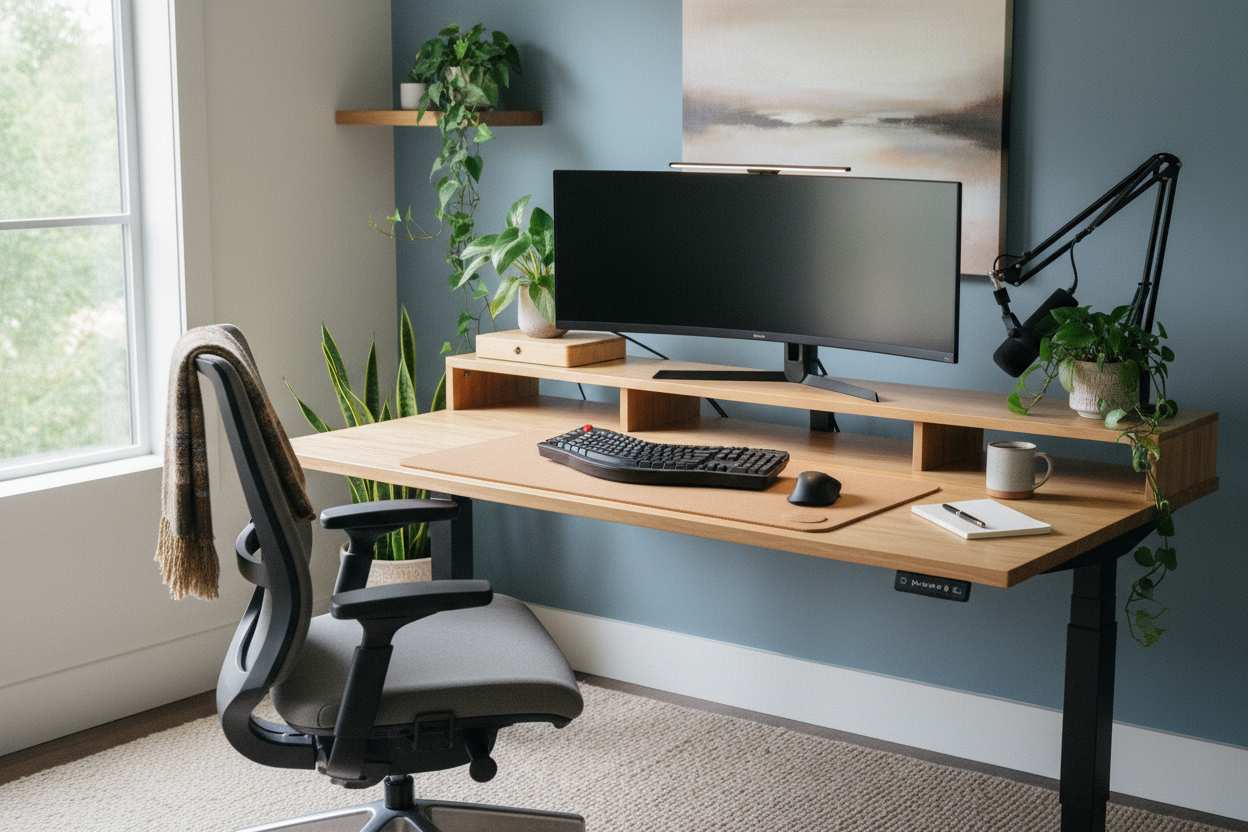
Good posture starts with awareness, not stiffness. Picture a neutral spine: pelvis untucked just enough to keep the natural curve in your low back, rib cage stacked over hips, and head balanced so ears line up with shoulders. Plant both feet so they feel grounded, and set your chair so hips are level with or slightly above knees. Slide your keyboard close to keep elbows near your sides at right angles, forearms supported, and relaxed shoulders away from ears. Lift the screen so your gaze meets the top third of the display to reduce neck tilt. Breathe slowly into your belly to release excess tension. Think of this as stacked alignment, not a rigid pose to maintain all day. Check in regularly: soften your jaw, widen collarbones, lengthen the back of your neck, and feel sit bones anchored. A few seconds of mindful reset prevents the slow creep of slouching and the aches that follow extended desk time.
Microbreaks That Matter
Desk work rewards pace, but your body rewards microbreaks. Aim to change position every half hour, even if only for one minute. Stand, stretch tall, and perform slow movement snacks: calf raises, gentle spinal twists, or a brisk walk to refill water. Alternate tasks that require different postures to distribute load across tissues. Keep a stable container nearby to encourage sips and natural stand ups. Pair breaks with everyday triggers using habit stacking: after sending an email, do ten shoulder blade squeezes; after a call, do a quick posture reset. Use a soft timer or a sticky note cue rather than loud alerts that you will ignore. On heavy focus days, try desk marching, heel digs, or seated hamstring slides to keep circulation flowing. These brief, regular resets help reduce stiffness, maintain joint lubrication, and support steady energy without derailing productivity.
Neck and Upper Back Relief
Long hours of screen time pull the head forward and tighten the neck. Counter this with the chin tuck: glide your chin straight back, lengthen the back of your neck, and breathe for several slow counts without lifting the chin. Add small nods to mobilize the upper cervical joints. For upper traps, gently tilt your head to one side while reaching the opposite hand toward the floor; then rotate the nose toward the armpit to target the levator scapulae. Use scapular retraction by pinching shoulder blades subtly down and back as if sliding them into back pockets, avoiding over squeezing. Lean back over the chair's backrest for thoracic extension, supporting your head and opening the chest. Combine these with nasal breathing to reduce tone in overworked muscles. Move slowly, never forcing ranges. Done throughout the day, these simple moves restore alignment, reduce pressure on discs and nerves, and keep your neck and upper back supple and pain resistant.
Shoulders and Chest Opener
Hours of typing shorten the chest and overload the front of the shoulders. Open up with a desk-based pec stretch: place forearms or hands on the desk edge, step one foot back, soften your ribs, and hinge at the hips until you feel a gentle stretch across the chest. Add a shoulder roll sequence, drawing circles forward and backward, then shrug up and release down with a long exhale. Strengthen posture muscles with Y T W raises: squeeze shoulder blades down and out as you lift arms overhead, out to the side, and into a W shape. If you have a light band, perform external rotation with elbows tucked at your sides, focusing on smooth control. Try wall or desk angels, sliding forearms up while keeping ribs quiet. Balance stretch with gentle strengthening to build postural endurance, which matters more than any single stretch. Over time, this combo helps shoulders sit centered, improves breathing mechanics, and reduces nagging upper arm discomfort.
Wrists, Hands, and Forearms
Keyboards and mice demand loads of fine motion. Keep tissues happy with neutral wrists and regular mobility. Perform prayer and reverse prayer stretches without forcing the angle. Cycle through tendon glides: straight hand, hook, full fist, tabletop, and straight fist, pausing briefly in each shape. Add gentle nerve flossing for the median nerve: extend your arm to the side, palm up, and slowly tilt head away, then release. Keep mouse and keyboard close to minimize reach, and experiment with a light grip to reduce forearm tension. Shake out hands, spread fingers wide, and press palms together with soft elbows. Alternate pointing and flexing fingers, drawing slow circles with thumbs to lubricate joints. On deep work blocks, switch mousing sides for short intervals or try keyboard shortcuts to reduce repetition. Small, frequent resets prevent tendon irritation, preserve dexterity, and keep your wrists comfortable, so you can type and navigate with ease.
Hips, Low Back, and Core
Sitting shortens hip flexors and can mute the glutes. Stand and step into a gentle split stance, tip the pelvis under slightly, and lean forward until you feel a front hip stretch. Breathe low and slow. In the chair, try a seated figure four: cross an ankle over the opposite knee and hinge at the hips to open the outer hip. Add glute activation by performing slow, controlled sit to stands, pushing through heels and squeezing at the top. Explore a pelvic tilt series while seated, rolling the pelvis forward and back to nourish the lower spine. Support your back with core bracing: exhale, gently draw the lower belly in, imagine corset muscles hugging around the waist, and hold light tension while moving. Sprinkle in standing hamstring reaches and side bends. These moves distribute load away from the lumbar area, improve circulation, and restore hip mobility, helping your lower back feel strong and supported.
Eyes, Breath, and Stress
Your visual system influences posture and tension. Schedule visual breaks using the simple approach of shifting gaze to something far away at regular intervals to relax focusing muscles. Alternate near and far targets, blink fully, and try palming by covering closed eyes with warm hands for a few breaths. Pair eye care with calming breath work. Practice box breathing: inhale, hold, exhale, hold, keeping each phase steady and quiet through the nose. Or use longer exhales to cue relaxation in your neck and shoulders. Notice jaw tension and let the tongue rest lightly on the roof of the mouth, lips together, teeth apart. Soften the area between the eyes, drop the shoulders, and lengthen the exhale. These simple resets dampen stress signals that amplify pain, reduce screen fatigue, and help your body return to an easy, balanced posture without forcing it.
Build Your Routine and Progress
Consistency beats intensity. Anchor a simple circuit to daily cues for consistency: after logging in, posture reset; midmorning, neck and shoulder work; after lunch, hips and core; late afternoon, wrists and eyes. Track how you feel rather than chasing perfect form. When these moves feel easy, add progressive overload by increasing reps, adding light bands, or extending holds, always keeping quality first. Rotate positions through the day: seated, standing, and short walks. Practice self-awareness by noticing early signs of fatigue and adjusting before discomfort grows. Respect recovery with brief pauses between tasks and adequate hydration. If you experience persistent numbness, sharp pain, or symptoms that do not improve, consult a qualified professional. Celebrate small wins, like fewer end of day aches or better focus. A sustainable routine turns good intentions into daily momentum, helping you perform your best while keeping your body comfortable and resilient.